


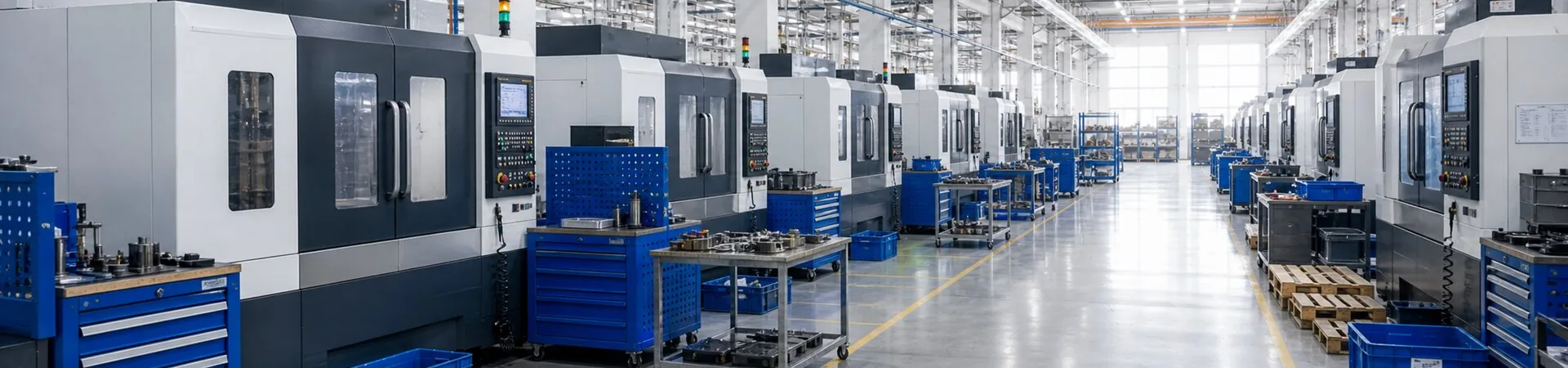
Industrial buyers often face a gap between what a drawing specifies and what their supplier can consistently deliver. Advanced CNC technology bridges that gap by improving machine capability, process control, and documentation—not through marketing language, but through measurable improvements in tolerance, surface finish, and repeat order accuracy. Understanding what this actually changes helps procurement teams write better RFQs and avoid costly revisions later.
Material capability across metals
Modern CNC systems handle a wider range of materials than older machines. Aluminum, brass, bronze, stainless steel, and copper all behave differently during cutting. A newer spindle design and updated tool management system allow stable feeds and speeds for each material. This means a single supplier can produce aluminum brackets for electronics housings and stainless steel bushings for medical devices without adjusting subcontractors. Material traceability also improves with current inventory management, reducing the risk of receiving the wrong alloy on delivery.
Tolerance control in practice
Drawings with tight tolerances require more than a capable machine. Modern CNC controls maintain consistent positioning across thousands of cycles. Parts with tight tolerances such as precision turned sleeves, pins, and threaded inserts benefit from real-time tool wear compensation. This reduces variation between the first article and the thousandth piece. Buyers should verify whether their supplier can hold standard tolerances on repeated runs, not just on prototype samples.
Inspection and documentation quality
Advanced CNC technology supports better quality tracking. Automated inspection routines and updated CMM programs allow consistent measurement of critical features. For parts like stainless steel bushings, brass insert nuts, or copper sleeve components, this means thread gauge verification, surface finish checks, and dimensional records are generated reliably. Inspection reports become more detailed and easier to cross-reference against the original drawing revision. This documentation matters for audits and for maintaining consistency across annual repeat orders.
Multi-axis capability for complex geometry
Modern multi-axis CNC turning centers allow more features to be completed in a single setup. Components such as custom fasteners, shafts, and parts with compound angles no longer require multiple manual re-fixturing steps. This reduces cumulative error and shortens lead time for low to mid-volume production. For OEM teams working on automation equipment, sensor housings, or automotive assemblies, the ability to produce complex geometry with fewer handling translates directly into better part consistency.
Production volume and sourcing flexibility
CNC machining scales differently than casting or stamping. It remains cost-effective for prototypes, small batches, and medium-volume runs. This flexibility allows buyers to start with a sample order and transition to batch production without changing suppliers. When annual volume grows, suppliers with advanced equipment can maintain quality while reducing per-part cost through optimized cycle times. Stable production runs also make it easier to schedule regular shipments and maintain consistent packaging standards.
What to include in your RFQ
A well-prepared RFQ for CNC machined parts should include the drawing revision number, material specification, tolerance requirements, surface finish target, sample quantity, expected annual volume, and packaging needs. Lead time expectations and inspection report requirements should also be stated clearly. Suppliers familiar with precision parts and CNC turning services can respond more accurately when these details are provided upfront. Weeda Precision supports drawing-based CNC machining, prototypes, and batch production, and can assist with inspection discussion and quality documentation throughout the sourcing process.
Buyers should prioritize suppliers who can demonstrate consistent inspection practices and repeat order accuracy, not just competitive unit pricing. Advanced CNC technology improves the reliability of precision machined parts, but only when the buyer provides clear specifications and the supplier maintains proper quality control throughout production.