


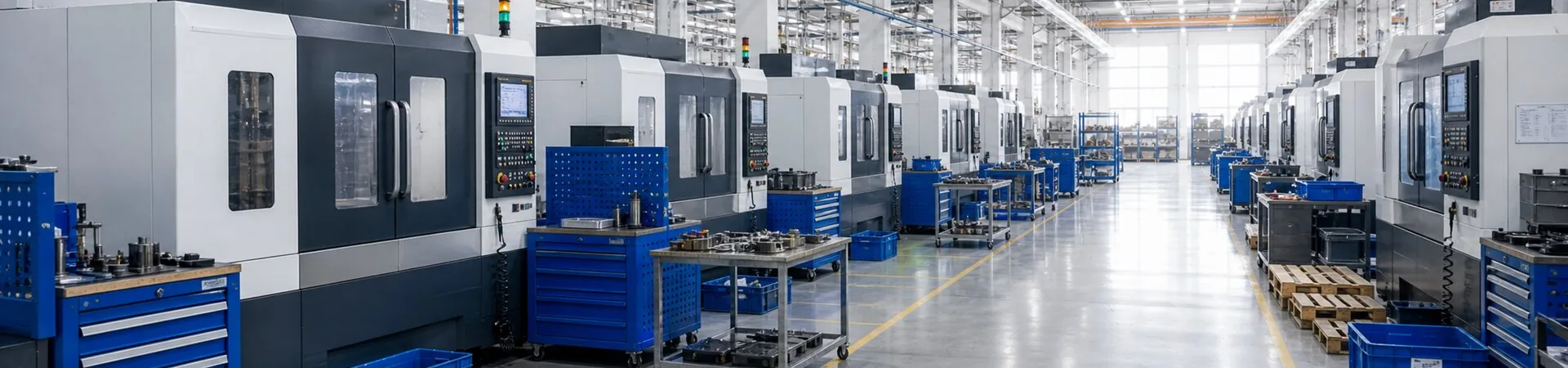
Meeting the demands of automotive, electronics, and automation sectors with reliable, high-volume production of precision machined components.
SHENZHEN, China – As global industrial supply chains tighten, the pressure on procurement managers and engineers to source consistent, high-quality precision hardware at scale has never been greater. High-volume production of custom CNC machined parts is no longer about speed; it is about maintaining tight tolerances across millions of units while controlling cost and lead time. For buyers in automotive, electronics, and automation, the challenge lies in finding a partner who can deliver repeatable precision without compromise.
01. How High-Volume Production Maintains Quality for Precision Machined Parts
When you are ordering 100,000 custom precision parts for a sensor assembly or a million automotive fasteners, the first question is always consistency. In high-volume production, the margin for error shrinks to microns. Manufacturers like those operating modern CNC turning services rely on multi-axis lathes and automated inspection systems to ensure every bushing, sleeve, or pin meets the same exacting standard. This is critical for industries like medical devices and aerospace, where a single defective stainless steel bushing can cause system failure.
The main requirement is real-time quality control. Advanced CNC machines now integrate probing and in-process measurement, catching deviations before they compound. For example, when producing brass insert nuts for plastic injection molding, the thread quality must be identical from the first part to the hundred-thousandth. This level of control demands machinery and rigorous process validation and material traceability. Buyers should look for suppliers who document every batch of stainless steel fasteners or custom copper parts with full inspection reports. High-volume production becomes a strength only when backed by statistical process control and certifications like ISO 9001 or IATF 16949.
02. What Industrial Buyers Need from Custom Hardware Manufacturing
Procurement managers and engineers sourcing custom turned parts for electronics or precision machined components for automation face a common dilemma: balancing cost with reliability. In high-volume production, the cheapest quote rarely delivers the lowest total cost. Frequent rejects, delivery delays, or inconsistent dimensions on parts like precision ground shafts or custom locating pins can halt entire assembly lines. The real value lies in a supplier's ability to scale without cutting corners.
For automotive applications, OEM precision parts such as press-fit nuts and self-lubricating bronze bushings must withstand extreme vibration and temperature cycles. This requires precise machining and deep understanding of material behavior under load. Similarly, in consumer electronics, custom precision parts for consumer electronics like tiny sleeves and pins must be burr-free and dimensionally stable across millions of units. Suppliers who offer ODM custom hardware services can also help engineers optimize designs for manufacturability, reducing waste and cycle time. The best partners in high-volume production are those who treat each order as an engineering challenge, a throughput target.
03. Real-World Applications and the Role of Automation
High-volume production of custom CNC machined parts directly supports the backbone of modern industry. In automation and robotics, precision machined components like industrial bushings and custom precision sleeves ensure linear motion systems operate with zero backlash. For sensor equipment used in telecommunications, brass and copper insert nuts provide reliable grounding and secure fastening in compact assemblies. Even in medical devices, where cleanliness and precision are paramount, high-volume runs of custom hardware manufacturing for components like guide pins and small fasteners must meet ASTM standards without deviation.
One growing area is the production of custom fasteners for plastic injection molding. Brass press-fit nuts, for instance, are inserted into molded parts to provide strong, reusable threads. High-volume production here demands exact control over knurling depth and outer diameter to prevent pull-out forces from weakening. Similarly, stainless steel bushings used in aerospace hydraulic systems require surface finishes that reduce friction and wear. These applications prove that high-volume does not mean low complexity. The best manufacturers invest in automated loading, robotic tending, and continuous process improvement to keep defect rates below 50 parts per million.
04. Looking Ahead: The Future of Scalable Precision
As industries push for faster time-to-market and leaner inventories, high-volume production of custom precision parts will only grow in importance. The trend toward nearshoring and dual sourcing means buyers need suppliers who can handle fluctuating demand while maintaining quality. “We see our clients moving away from single-source reliance,” said a senior operations manager at a leading precision manufacturing firm. “They want partners who can ramp up production of high precision custom fasteners or custom turned parts for electronics within weeks, not months. Our investment in flexible CNC turning services and automated inspection allows us to deliver that reliability at scale.”
For engineers and procurement professionals, the takeaway is clear: high-volume production is about quantity. It is about trust, traceability, and technical partnership. Choosing a supplier who can consistently deliver custom CNC machined parts, from brass insert nuts to precision ground shafts, ensures that your supply chain remains a competitive advantage, not a bottleneck.