


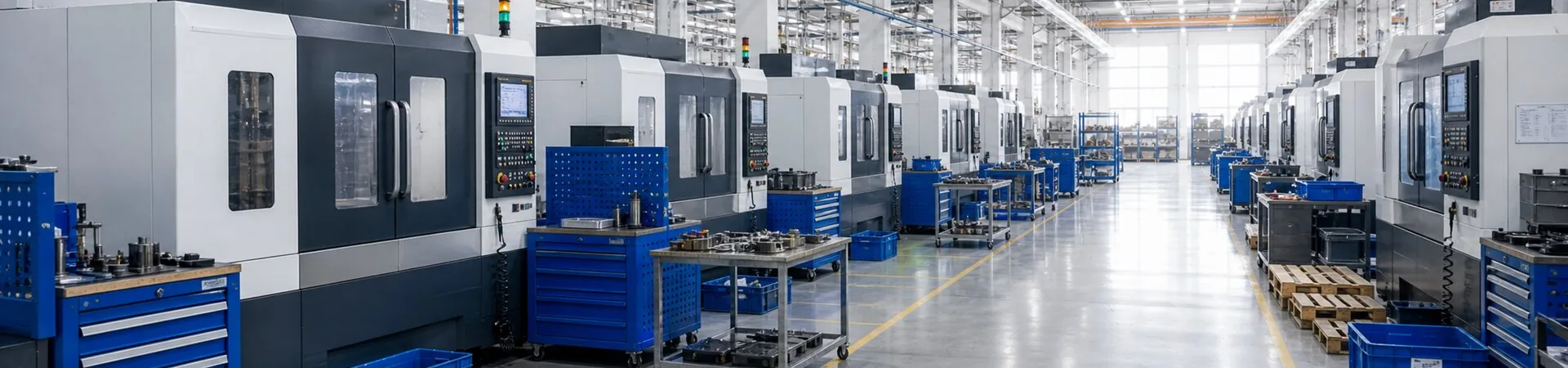
New capabilities in high-volume production of custom CNC machined parts meet growing demand across automotive, electronics, and automation sectors.
SHENZHEN, China — As industrial buyers across automotive, electronics, and automation sectors face mounting pressure to reduce lead times and improve part consistency, automatic lathe machining has emerged as a critical solution for producing precision machined parts at scale. The technology, capable of holding tight tolerances while running unattended, is reshaping how manufacturers approach high-volume production of custom hardware.
Background and Market Context
The global shift toward miniaturization and higher performance in end-use products has intensified demand for custom precision parts that are both complex and repeatable. Industrial buyers sourcing components such as bushings, sleeves, pins, and shafts increasingly require suppliers who can deliver OEM precision parts without sacrificing cost efficiency. Automatic lathe machining, particularly with Swiss-type and multi-spindle CNC lathes, addresses this need by combining speed with micron-level accuracy. For manufacturers of automotive fasteners and precision turned parts for electronics, the ability to run continuous cycles with minimal operator intervention translates directly into lower per-part costs and faster turnaround.
Key Developments in Automatic Lathe Machining
Recent innovations in automatic lathe machining have expanded its application beyond simple turned parts. Modern machines now integrate live tooling, sub-spindles, and bar feeders, enabling the production of custom CNC machined parts with complex geometries in a single setup. This is especially valuable for producing brass insert nuts, copper insert nuts, and stainless steel bushings used in demanding environments. For example, brass press-fit nuts and press-fit nuts for plastic injection molding require precise thread forms and consistent dimensional stability—both achievable through automatic lathe processes that eliminate secondary operations.
Additionally, advancements in toolpath software and real-time monitoring allow manufacturers to produce custom precision sleeves and custom locating pins with diameters held to within ±0.005 mm. This level of precision is critical for applications such as sensor housings in automation systems and precision ground shafts for medical devices. The integration of self-lubricating bronze bushings into automatic lathe production further demonstrates how material science and machining technology converge to solve real-world wear and friction challenges.
Industry Applications and Use Cases
The versatility of automatic lathe machining supports a wide range of industrial applications. In the automotive sector, high precision custom fasteners and stainless steel fasteners must withstand vibration, temperature extremes, and corrosive environments. Automatic lathe processes ensure consistent thread quality and material integrity for critical safety components. For electronics manufacturers, custom turned parts for electronics—such as connector pins and terminal shafts—require burr-free surfaces and tight concentricity, both achievable through controlled automatic lathe cycles.
In automation and robotics, precision machined components for automation include custom copper parts for electrical contacts and industrial bushings for linear motion systems. The complex profiles to machine profiles from bar stock without secondary handling reduces assembly errors and improves system reliability.
Company Expertise and Quality Standards
Suppliers specializing in automatic lathe machining typically invest in multi-axis CNC lathes from leading manufacturers such as Citizen, Tsugami, and Star. These machines, combined with automated bar feeders and part catchers, allow for unattended operation during high-volume production of custom hardware. Quality control processes include in-line gauging, CMM inspection, and material certification to ensure compliance with ISO 9001 and AS9100 standards. For ODM custom hardware projects, engineering teams collaborate with clients to optimize part designs for manufacturability, reducing tooling costs and cycle times.
Material selection is equally critical. Brass, copper, bronze, stainless steel, and aluminum are commonly machined, each requiring specific cutting parameters to maintain surface finish and dimensional stability. Custom fasteners for plastic injection molding, for instance, often use brass or stainless steel to resist corrosion while providing secure anchoring in plastic substrates. The combination of automatic lathe machining with rigorous material traceability ensures that every batch of custom precision parts meets the required specifications.
Market Impact and Future Outlook
As industrial buyers continue to seek reliable partners for sourcing precision turned parts and custom hardware, automatic lathe machining stands out for its ability to deliver both quality and scalability. The trend toward near-shoring and supply chain diversification also favors manufacturers who can offer CNC turning services with quick changeover and flexible production runs. Looking ahead, the integration of IoT and predictive maintenance into automatic lathe systems will further enhance uptime and process stability, making them even more attractive for mission-critical applications in aerospace, medical devices, and telecommunications.
Closing Statement
"Automatic lathe machining is no longer about high speed; it's about delivering repeatable precision across millions of parts while adapting to the unique demands of each industry," said the company's lead manufacturing engineer. "For buyers who need custom CNC machined parts that perform consistently in the field, this technology provides the foundation for reliable, cost-effective supply."